
Logistics automation, especially for SMEs, is not just a matter of technology: choosing the right VLM can truly transform business processes
When talking about logistics automation, people immediately think of robots, vertical systems and smart software. But choosing a VLM means much more than that: it is a strategic decision. It’s about rethinking spaces, improving operational flows, optimizing customer service and, above all, preparing to grow in a solid and sustainable way.
In this context, ICAM’s SILO² system has proven to be a winning choice for many companies, both large and small. It’s not just about automated storage, but about a profound transformation of internal processes. From managing raw materials to tracking finished products, every stage becomes more efficient, safer and measurable.
We have collected five real-life stories from businesses that have integrated SILO² into their logistics. Different industries, different goals, but one common element: the drive to innovate in order to build a more competitive future.
1. A VLM for small businesses: why it pays off
A striking example of how automating logistics in artisan companies can improve international competitiveness, even with smaller volumes.
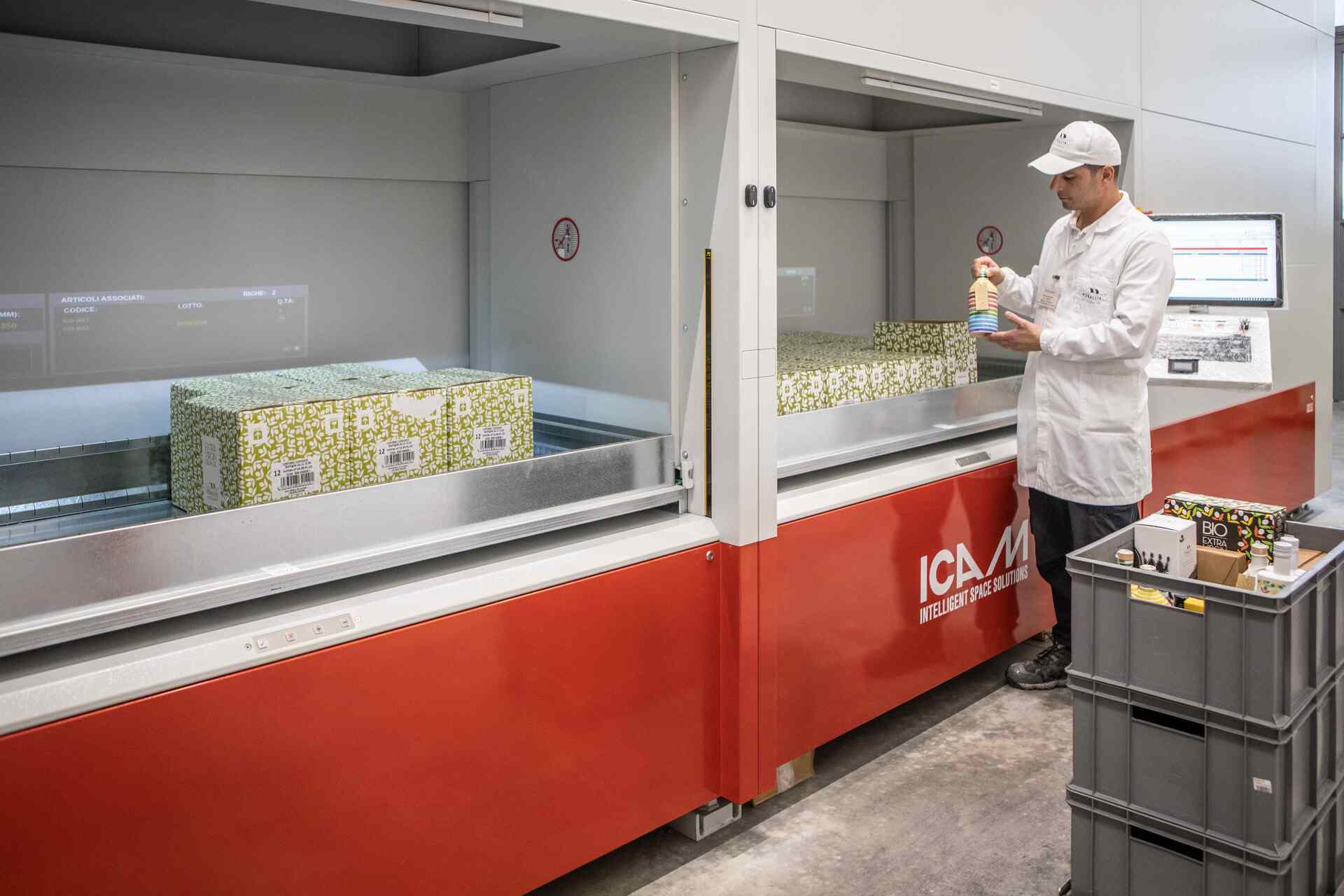
One of the most common myths about automation is that it’s only for large industries. Yet Frantoio Muraglia, a historic producer of Apulian extra virgin olive oil, proves the opposite. With artisanal production and customers spread across the globe, they needed a solution to ensure fast shipping, especially during peak seasons.
Installing a SILO² VLM was the decisive step to improve responsiveness and maintain high quality standards, even in logistics.
As CEO Savino Muraglia explains: “Our customers, from Asia to the United States, expect quality in service as well. The automated warehouse allows us to fulfill orders in record time, without compromising our artisanal approach.”
Key lesson: even small businesses can – and must – aim for logistics excellence to compete in global markets.
2. How to automate logistics in seasonal industries
This case highlights the benefits of a tri-column automated storage system in industries facing seasonal peaks and fluctuating demand, such as the school stationery sector.
For companies operating in markets with significant peak seasons, managing logistics can quickly become a challenge. Papironia, a nationally renowned distributor of stationery products, used to struggle every year with unpredictable volumes and growing pressure on order fulfillment.
The solution was the installation of four tri-column automated storage systems configured as a pod of machines. This modular setup allowed the company to flexibly manage variable workloads while ensuring full traceability of every single item.
“Before, we struggled with inventory control and order preparation times. Now we have visibility, speed, and reliable data.”
Key lesson: modular and scalable automation is a powerful solution to handle uncertainty and improve performance during peak seasons.
Learn more about the Papironia case
3. Logistics automation in the luxury and design industry
In highly customized sectors such as design and luxury, integrating a vertical storage system means ensuring production continuity, material traceability, and protection of component integrity.
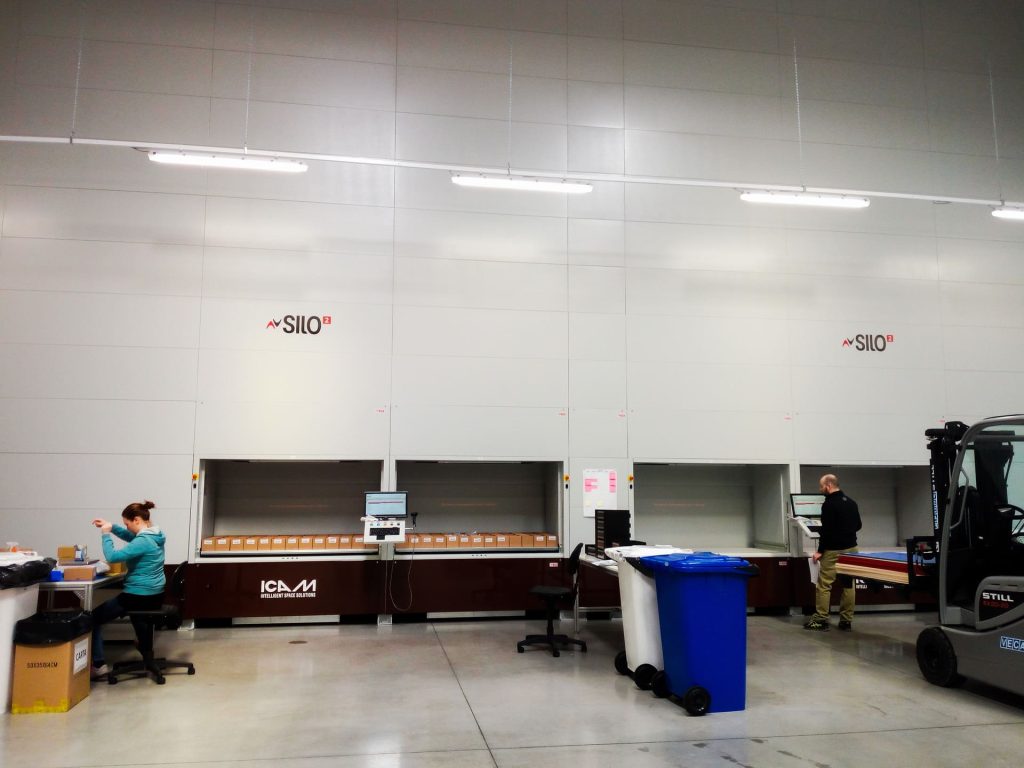
In the world of luxury, every detail matters, even those the customer never sees. LVMH knows this well: at its production site in Longarone, it manufactures eyewear for some of the world’s most prestigious maisons. To guarantee excellence at every stage of the process, internal logistics must also be flawless.
The company chose ICAM vertical storage systems for the intelligent and secure management of high-value components. Material protection, precise traceability, and space optimization have helped establish an elite production standard.
Eng. Becca, Logistics Consultant: “When creativity meets precision, every detail matters, even logistics.”
Key lesson: excellence lies not only in the final product but also in the processes that make it possible. An efficient storage system can become a key asset for those striving for perfection.
Learn more about how SILO² helped LVMH achieve operational excellence
4. Automated storage for visually similar materials: zero errors and maximum safety
Achieving error-free logistics for visually similar products is only possible with advanced automation systems featuring evolved visual traceability, such as ICAM’s Smart Vision.
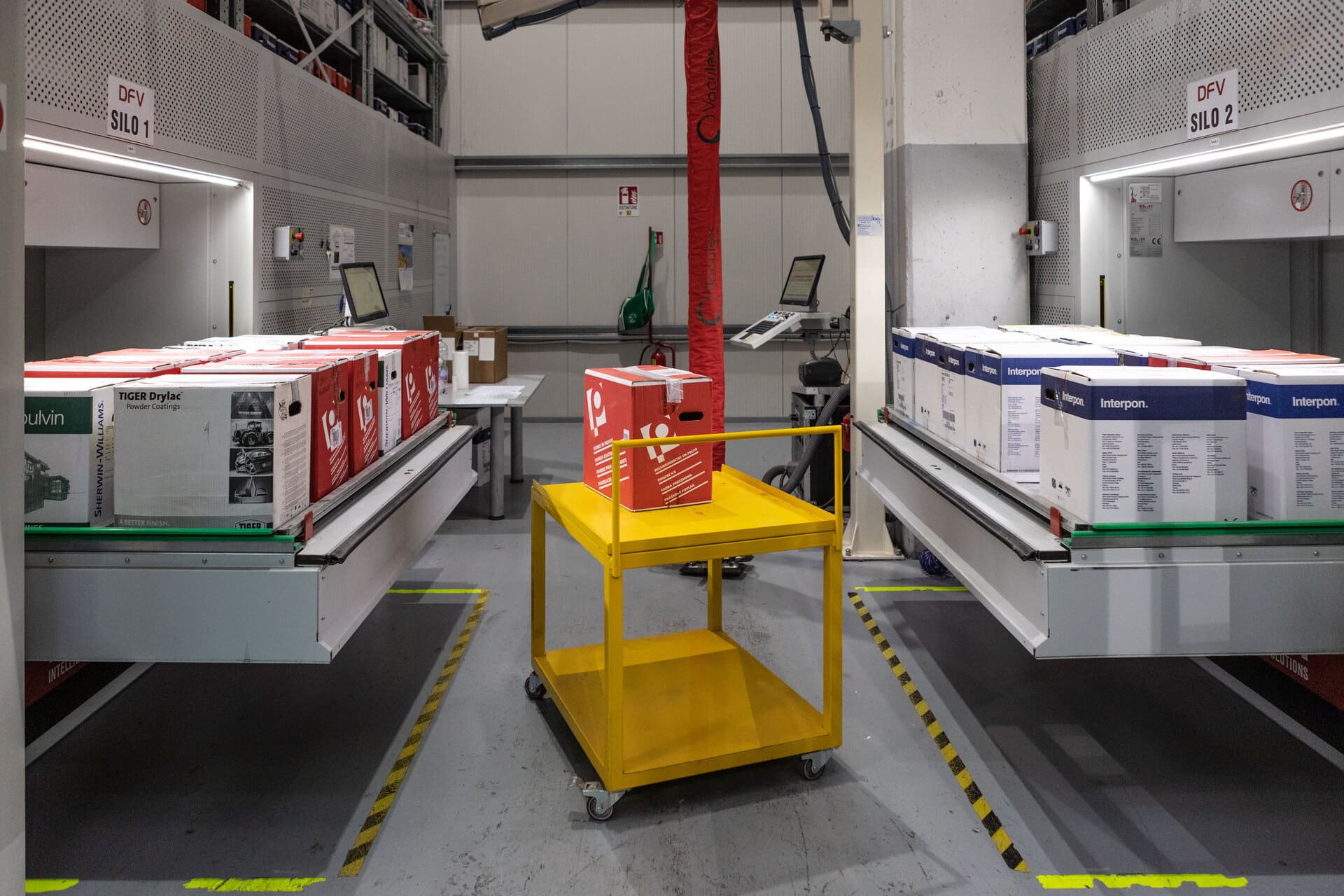
In the aluminum coating industry – where every package can look identical – the margin for error is extremely small. DFV, a leader in wood-effect aluminum coating, tackled this challenge by integrating two ICAM tri-column vertical storage systems equipped with the Smart Vision technology.
Thanks to sophisticated image-processing algorithms and QR code scanning on the top of each package, the system ensures the correct placement and retrieval of materials, immediately flagging any anomalies. Combined with a pneumatic manipulator featuring a vacuum gripping system, operators can work safely and effortlessly.
Used as an inter-operational buffer, ICAM’s systems support a continuous and precise flow of raw materials to the coating booths, fully aligned with the just-in-time paradigm and Industry 4.0 principles.
“Today, every retrieval is safe, traceable and fast. Errors have virtually disappeared.” Giovanni Accogli, Logistics Manager at DFV
Key lesson: automation also means safety, control, and consistent quality, especially in complex environments where every detail counts.
Watch the video story of DFV
5. Vertical lift modules: a strategic investment for SMEs and large enterprises
Companies that chose the SILO² vertical lift module didn’t do it for the sake of following a trend. They did it because they had a clear vision: automation isn’t a cost, it’s a strategic investment.
Frantoio Muraglia, Papironia, LVMH and DFV – four very different businesses – share one thing: they started where it mattered most. By identifying bottlenecks in their logistics processes and turning them into strengths, they became more efficient, more resilient, and better equipped to face new challenges with clarity and control.
Key lesson: investing in automation means enabling growth. SILO² is much more than a storage system: it’s a tool for building the future.
Your next move in warehouse automation
The success stories we’ve shared clearly show that warehouse automation isn’t an endpoint , it’s a starting point. It’s the conscious choice of businesses that want to grow, cut waste, respond faster to the market and deliver outstanding service.
Now it’s your turn. If you’re considering automating your warehouse, start by reflecting on these three key questions:
- Have you already mapped out the bottlenecks in your logistics flow?
- Which processes could become faster and safer through automation?
- How would your business change if you could double warehouse efficiency?
We’ll help you find the solution that truly makes a difference for your business.