
Demand surges and volatility: the new challenge for modern logistics
Managing peak season has become one of the main challenges for today’s supply chain operators.
Seasonality is no longer an exception — it’s the new normal.
Black Friday, Cyber Monday, Prime Day, Single’s Day, Back to School, and a continuous series of promotions have turned the global commercial calendar into a nonstop sales cycle.
The result? A highly variable and unpredictable demand, with volumes that increase suddenly and require a fast, precise, and flexible logistics response.
Warehouses must process more orders in less time while maintaining product traceability, picking accuracy, and cost control.
Without proper warehouse automation, managing peak season becomes complex: rising volumes lead to errors, delays, space saturation, and additional costs from temporary labor.
That’s why SILO² VLMs, equipped with side-by-side picking and refilling stations and multi-column configurations, represent a concrete solution to ensure efficiency and continuity even during periods of maximum commercial pressure.
Warehouse automation as a lever to manage peak season
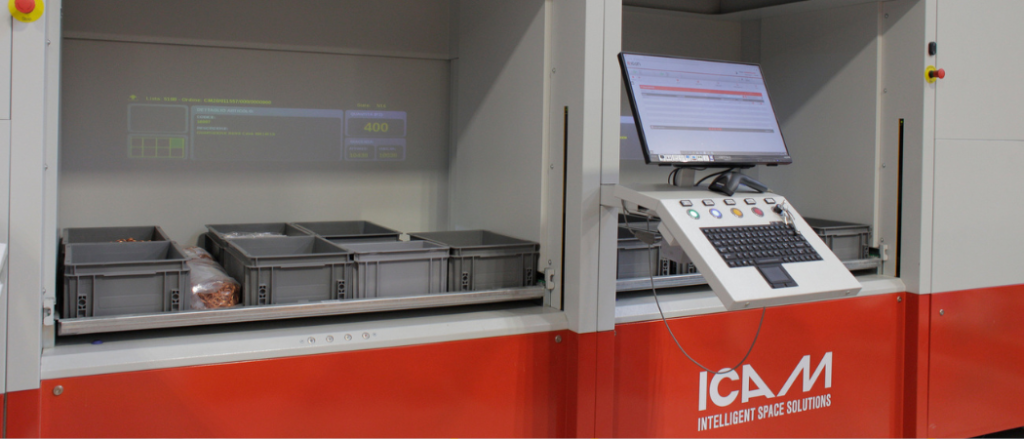
For logistics providers and multichannel distributors, managing peak season means more than just speeding up picking times — it’s about keeping service promises even when volumes explode.
Automated storage systems and advanced order picking technologies allow companies to handle fluctuating workloads without increasing staff, improving productivity and reducing operational errors.
Automation is a true strategic lever for resilience.
By integrating ICAM’s management software with corporate ERP and WMS systems, it becomes possible to synchronize workflows, monitor KPIs in real time, and dynamically manage priorities.
Companies like GLS, Papironia, Graziano Sas, and Frantoio Muraglia prove it: automation is the key to efficient, scalable, and sustainable peak season logistics.
Case study: GLS — managing returns and undelivered parcels during peak season
During high-demand periods, managing returns and undelivered parcels is one of the most critical logistics activities.
GLS installed a multi-column SILO² VLM to automate the entire process of receiving, verifying, and storing parcels.
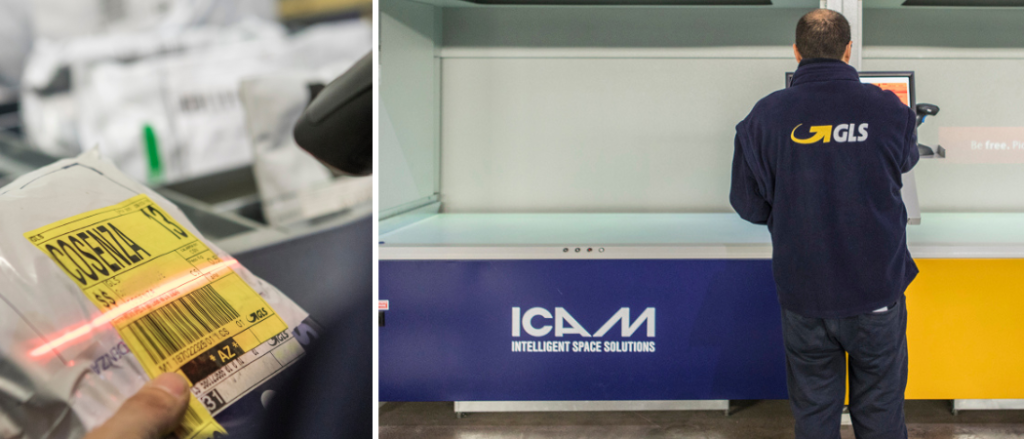
Thanks to WMS integration, every parcel is tracked and processed automatically, reducing return handling times by 30% and increasing operational accuracy.
This allowed the company to handle peak season without extra labor, freeing up space and boosting overall productivity.
Cases: Papironia and Graziano Sas — reactive logistics for peak season demand
Managing peak season is also crucial for large-scale distributors.
Papironia, a leading stationery company, faces every year the surge of orders related to the Back to School period, often amplified by online campaigns and retail promotions.
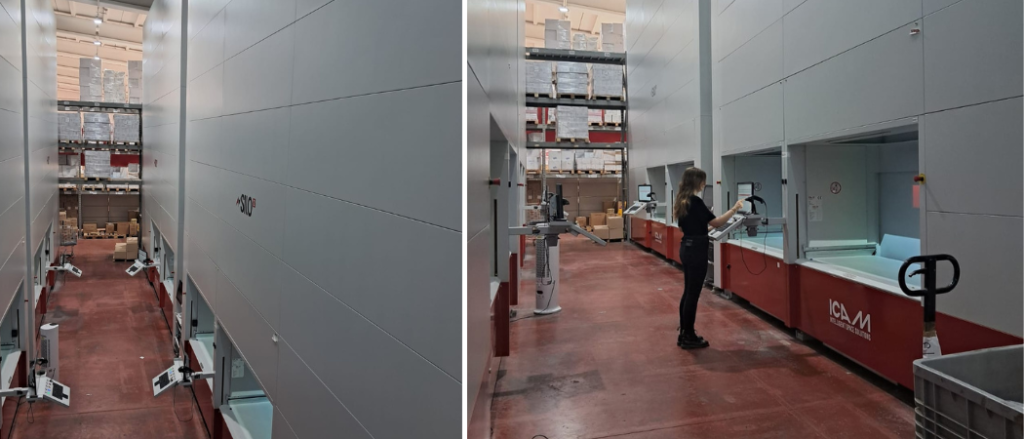
With four SILO² tri-column VLMs, the company has made its logistics modular and scalable, reducing order preparation times by 35% and nearly eliminating picking errors.
Graziano Sas, a multichannel distributor of confectionery ingredients, has optimized its peak season management — particularly during Christmas and Easter — by installing five SILO² VLMs.
Result: +100% operator productivity and smooth operations even in the busiest periods.
Case study: Frantoio Muraglia — craftsmanship meets logistics efficiency
For Frantoio Muraglia, a premium extra virgin olive oil producer from Apulia, peak season linked to holidays and global e-commerce campaigns had become increasingly challenging.

By installing a SILO² VLM, the company halved average order fulfillment times and ensured global deliveries within 24 hours of order receipt.
As CEO Savino Muraglia states:
“Logistics excellence is an integral part of our product’s quality: speed, precision, and attention to detail must coexist.”
The concrete advantages of SILO² multi-column VLMs
The cases of GLS, Papironia, Graziano, and Muraglia demonstrate that automation is the most effective answer to how to manage peak season.
A multi-column VLM allows companies to:
- flexibly manage variable volumes and seasonal returns;
- reduce picking errors and improve traceability;
- optimize vertical space, increasing productivity per square meter;
- enhance safety and ergonomics at the picking/refilling stations;
- integrate data and KPIs into ERP and WMS systems for continuous control.
Turn peak season into an opportunity
Whether you manage a logistics hub, a distribution center, or an e-commerce operation, peak season shouldn’t be seen as a risk: it can become the ultimate proof of your system’s efficiency.
Contact us and discover how to configure your automated warehouse to face the next peak season successfully.
FAQ
1. Why is peak season a challenge for modern logistics?
During events such as Black Friday, Prime Day, Back to School, or Christmas sales, order volumes grow unpredictably. Companies must process more orders in less time while ensuring accuracy and punctuality. Without automation, this leads to picking errors, delays, and higher operational costs.
2. How does warehouse automation help manage peak season demand?
Warehouse automation boosts productivity without adding human resources. Systems like SILO² multi-column VLMs optimize space, speed up order picking, and enhance traceability, ensuring continuity even under peak pressure.
3. What are the advantages of a VLM compared to a traditional warehouse?
A VLM uses the building’s height to maximize storage capacity. It minimizes manual movements, reduces picking errors, and increases operator safety. With integrated software, every operation is monitored and optimized in real time.
4. What does “multi-column configuration” mean and what are its benefits?
A multi-column VLM allows multiple storage columns to operate simultaneously, increasing picking speed and material availability. This setup helps handle high workloads — as seen in the GLS case — while significantly saving floor space.
5. How does automation contribute to sustainable logistics?
Beyond reducing errors and waste, warehouse automation enables more efficient use of energy and space. Fewer manual movements, shorter travel distances, and lower resource consumption translate into more sustainable logistics — aligned with Industry 5.0 principles.
6. Which companies can benefit from warehouse automation?
Not only large logistics operators but also SMEs, multichannel distributors, and artisanal producers can gain concrete advantages. As shown by GLS, Papironia, Graziano Sas, and Frantoio Muraglia, automation adapts to different sectors and workloads, delivering greater efficiency and control.
7. How can I know if my warehouse is ready for automation?
A preliminary analysis of logistics flows, activity peaks, and space utilization is the starting point. ICAM experts can simulate the ideal VLM configuration, assessing ROI, scalability, and operational benefits over the medium term.