
Inventory optimization is a crucial element for the success of any business, whether in manufacturing or distribution contexts. However, its importance is often underestimated, leading to a significant error. A study conducted by the prestigious magazine Supply Chain Management Review found that U.S. companies, on average, have about 30% of their capital tied up in inventory, which represents a major opportunity to maximize returns and optimize cash flow.
Why is inventory optimization important?

Having a warehouse full of items that sit on shelves for long periods, collecting dust and taking up valuable space, equates to losing important business opportunities. This space could instead be used to store items that are in higher demand in the market, thus generating greater profits for the company. But it doesn’t stop there. Following inventory optimization practices—efficiently managing stock—also minimizes waste because only what is truly needed is kept in storage, leading to significant cost savings and relevant operational efficiencies. Proper material management allows for quicker responsiveness to market demands, positively impacting customer satisfaction and trust in the company.
Efficient inventory management: where to start?
Having any product always available in the warehouse allows for timely fulfillment of market requests, but it can also lead to reduced current liquidity and economic losses if products remain unsold. Conversely, if inventory is insufficient, we might face additional costs for last-minute purchases or expedited shipping.
How to determine the right trade-off?
For inventory optimization, it is essential to identify the right level of stock. This requires a strategic and well-planned approach. In this article, we aim to provide you with 5 valuable tips to optimize your company’s inventory levels, particularly focusing on the opportunities offered by Industry 4.0, but not limited to that.
5 tips to effectively manage inventory optimization:
- Analyze the evolution of demand for your products.
- Adopt a lean philosophy for inventory management.
- Optimize the warehouse layout according to business needs.
- Implement automation and digitalization systems for processes.
- Establish a Supply Chain Collaboration relationship with your suppliers.
1 – Analyze the evolution of demand for your products
The first step is to understand past demand in order to forecast future demand as accurately as possible. To do this, it is advisable to start by analyzing historical data on production and/or sales, identifying trends and seasonality, and considering all external factors that may influence demand, whether exogenous or endogenous. The analysis and monitoring of this data should be carried out constantly to always be in a position to make timely and accurate decisions regarding operations organization and procurement. A commonly used method is time series analysis, which involves analyzing historical data on production and/or sales to identify patterns and trends.

2 – Adopt a lean philosophy for inventory management
Integrating lean philosophy principles into Inventory optimization is essential to minimize waste and enhance the overall efficiency of the company—in short, for inventory optimization. Within the macro process of inventory management, identifying critical materials and reducing excess stock is very important to avoid immobilizing capital in low-value goods, whether physical or strategic. The adoption of methodologies such as Just-in-Time (JIT) and Kanban provides an effective approach to synchronize procurement with actual production or forecasted sales, preventing prolonged inventory accumulation. Implementing lean philosophy in inventory management is a fundamental element to increase efficiency, limit waste, and enhance the company’s overall reputation. By reducing unnecessary stock and optimizing procurement based on actual needs, the company can achieve significant competitive advantages, starting with increased customer satisfaction.
3 – Optimize the warehouse layout according to business needs
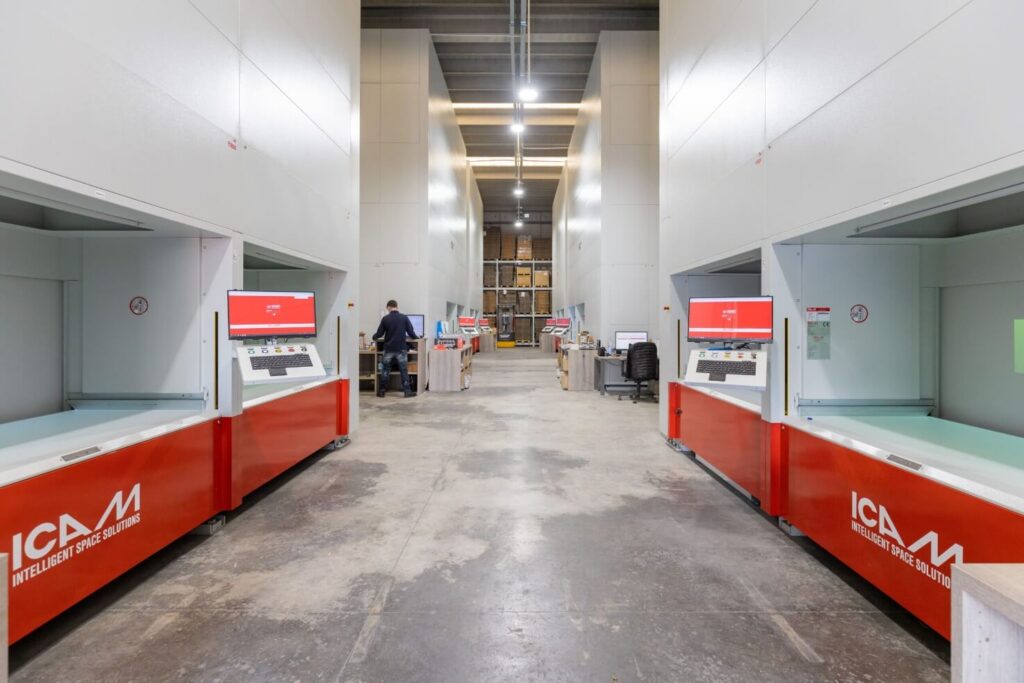
The proper organization of space in the warehouse is another important aspect to focus on in inventory management. Having products in stock, with limited space, inevitably excludes others. Every square meter is precious, and therefore maximizing the available space is strategic from both operational and financial perspectives. To solve this issue, vertical lift modules like SILO come to the rescue, as their vertical development allows for increased storage capacity while reducing the floor space occupied. A successful example in this direction is Alberto Drusi, a company distributing engine parts and components, which, compared to its previous traditional shelving, has been able to store about 50% more references thanks to the installation of 9 SILO² warehouses, reducing the floor space occupied.
4 – Implement automation and digitalization systems for processes
In the current constantly evolving and increasingly globalized market scenario, automation proves to be an indispensable ally for inventory optimization. The implementation of ERP and advanced management software that enable in-depth analysis based on advanced algorithms is now essential for optimizing inventory and timely planning of procurement to ensure product availability aligned with market needs.
Various methods can be employed to optimize inventory:
- ABC analysis: Classification of items based on their importance.
- Just-in-Time (JIT): Strategy based on minimal necessary inventory.
- EOQ (Economic Order Quantity): Calculation of the optimal quantity to order.
- Procurement time optimization: Reduction of time needed to replenish stock.
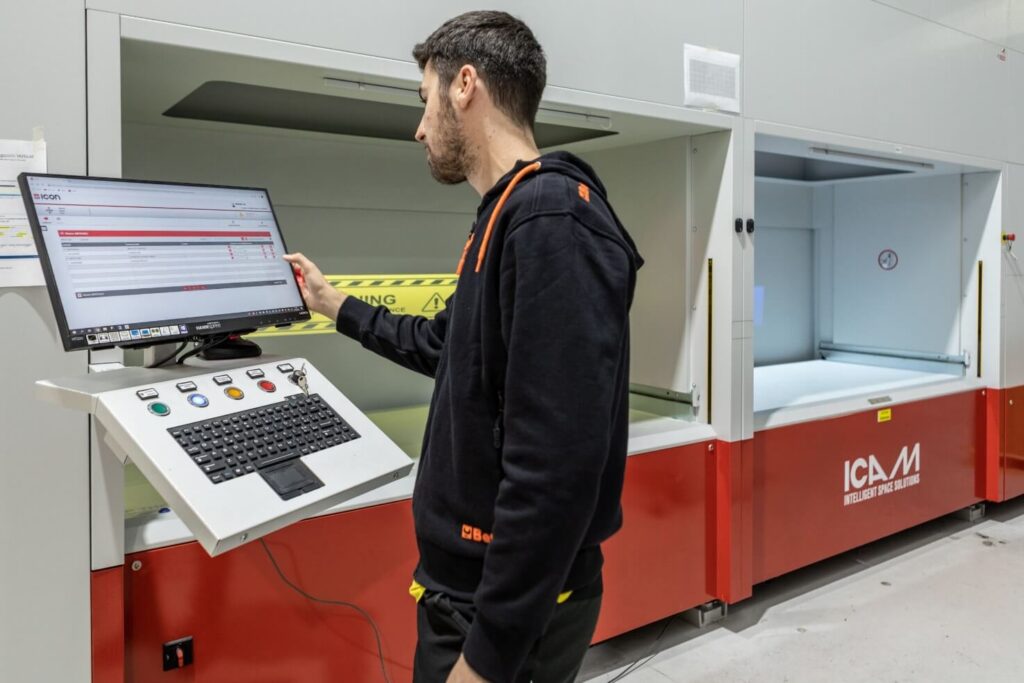
ICON, the management software for ICAM’s automatic storage solutions, can easily integrate with the most popular ERPs, WMS, and third-party platforms, ensuring companies have up-to-date control of their inventory while offering the ability to set low-stock alerts and automatic reorder points.
5 – Establish a supply chain collaboration relationship with your suppliers
Close collaboration with suppliers can significantly contribute to efficient inventory management. Viewing suppliers as true partners allows for the sharing of strategic information on demand, thus reducing delivery times and optimizing procurement. Adopting a collaborative approach throughout the Supply Chain, sharing real-time data and information, enables more accurate and cost-effective reorder strategies.
Conclusions
The crucial role of inventory management for the success of a company is clear, especially in today’s highly competitive and dynamic context. By implementing the suggestions described in this article and leveraging the opportunities offered by 4.0 technologies, entrepreneurs and managers will be able to optimize inventory management processes, reduce waste, improve overall efficiency, and gain significant competitive advantages.
Discover how you can achieve a more efficient warehouse with ICAM VLMs.