
Warehouse logistics, also known as intralogistics, is a vital component of business operations, ensuring the efficient management of goods, materials, and products from receipt to shipment. In this article, we will examine warehouse logistics in detail, compare it with general logistics, explore the involved stages, and analyze the essential role of the warehouse logistics manager.
What is Warehouse Logistics?
Warehouse logistics, often referred to as internal supply chain management, encompasses all activities and processes involved in the movement, storage, and distribution of goods within a warehouse. These operations are crucial to ensure that products are available when and where they are needed, while keeping management costs low and optimizing overall warehouse efficiency.
The main objectives of warehouse logistics are:
- Space optimization: Efficiently use the available space in the warehouse to maximize storage capacity.
- Operational efficiency: Minimize the time and costs associated with moving goods.
- Stock management: Maintain accurate control over the quantities of goods in the warehouse to avoid excess or insufficient stock.
- Order fulfillment speed: Accelerate the order preparation process to meet customer needs promptly.
Warehouse Logistics vs General Logistics
Warehouse logistics is just a part, albeit a fundamental one, of logistics. The two terms can be confusing, so it’s important to highlight their differences by comparing general logistics with warehouse logistics.
General Logistics
General logistics extends beyond the boundaries of the warehouse, involving all activities necessary to manage the flow of goods, services, and information from the origin to the final consumer. This includes operations such as demand planning, transportation management, procurement, supplier relations, and delivery to the user.
Warehouse Logistics
Warehouse logistics, on the other hand, focuses exclusively on the internal operations of the warehouse, hence it is also defined as intralogistics. This includes activities like receiving goods, storage, stock management, order preparation, and shipment. Warehouse logistics is becoming increasingly strategic as it directly or indirectly impacts other stages of general logistics, determining the satisfaction of all supply chain stakeholders: suppliers, manufacturers, distributors, and shippers.
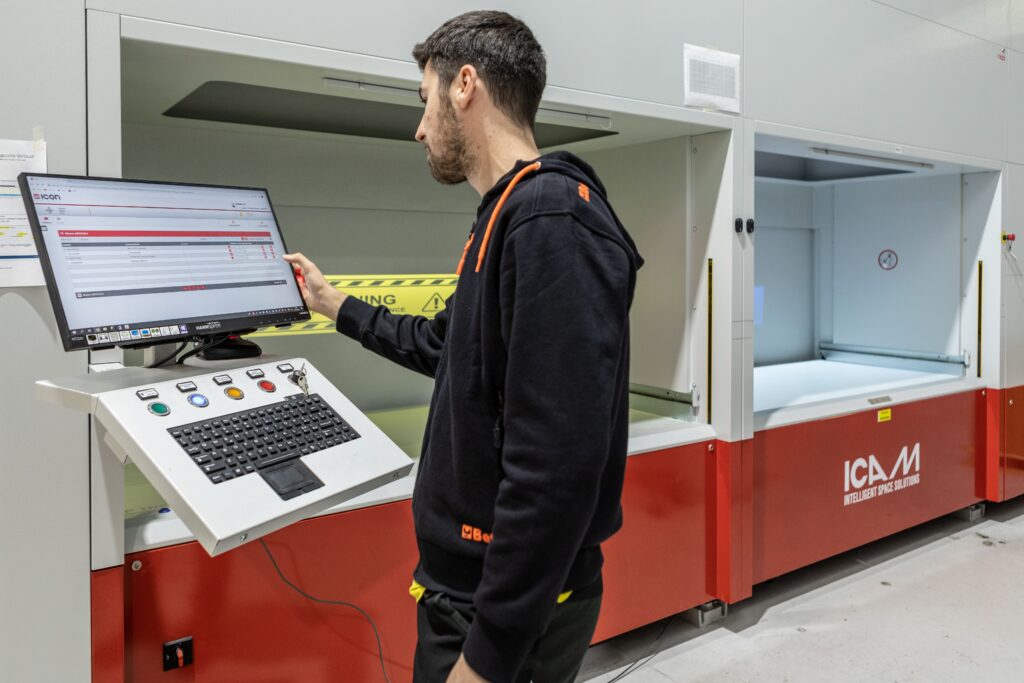
The stages of Warehouse Logistics
Warehouse logistics encompasses all warehouse operations and unfolds in several stages, all strategic for achieving the goal of optimized storage management with time and performance benefits. The management of a warehouse’s logistics involves five stages:
- Goods Reception
- Storage
- Stock Management
- Order Preparation
- Shipment
Let’s analyze each stage of warehouse logistics.
- Goods Reception The first stage of warehouse logistics is receiving goods from suppliers. This process involves verifying the quantity and quality of the goods received against the placed order. Verification includes:
- Checking transportation documents: Comparing the delivery note with the order placed.
- Inspecting goods: Physically checking the goods for any damages.
- Storage Once received, goods must be efficiently placed within the warehouse. This includes identifying storage locations and organizing the available space according to each company’s specific needs.
- Identifying storage locations: Determining the most suitable place for each type of goods.
- Organizing space: Arranging goods to optimize accessibility and efficiency.
- Stock Management Stock management is an ongoing activity that involves constantly monitoring the quantities of goods in the warehouse.
- Monitoring stock levels: Keeping track of the quantity of goods in the warehouse.
- Updating systems: Using management software to update inventory data.
- Order Preparation The order preparation stage can also be called order consolidation or order picking. When an order or multiple orders arrive, goods must be picked, grouped, and prepared for shipment. Key activities in this stage include:
- Picking: Selecting and retrieving goods according to order specifications.
- Packing: Packaging goods securely and efficiently for shipment.
- Shipment The final stage of warehouse logistics is the shipment of goods to customers, which involves preparing shipping documents and coordinating with carriers.
- Preparing shipping documents: Creating labels and necessary transportation documents.
- Coordinating with carriers: Organizing the pickup and delivery of goods.
The role of the Warehouse Logistics Manager
The warehouse logistics manager plays a crucial role in ensuring the smooth operation of all warehouse activities, as they are responsible for key functions of goods management and movement:
- Receiving and checking goods: Verifying the quality and quantity of received goods.
- Organizing the warehouse: Efficiently arranging goods in the available spaces.
- Managing stock: Constantly monitoring inventory levels and updating information systems.
- Order preparation: Selecting and packaging goods based on customer orders.
- Shipment: Coordinating shipping operations with carriers.
Optimizing warehouse operations with ICAM Solutions
ICAM’s storage solutions offer an innovative way to optimize warehouse management operations, enabling companies to improve efficiency and productivity. ICAM’s multi-column automated warehouses guarantee:
- Maximized space: Automated warehouses use lift systems to make the best use of the available warehouse space.
- Integrated management software: Providing software capable of monitoring and controlling all warehouse operations.
- Automatic picking technologies: Using advanced technologies to speed up the picking process.
- Integrated security: Offering advanced security systems to protect personnel and goods during warehouse operations.
Explore ICAM’s automated and semi-automated warehouse systems