
The strategic role of picking system
We would like to explain to you what a picking system is.
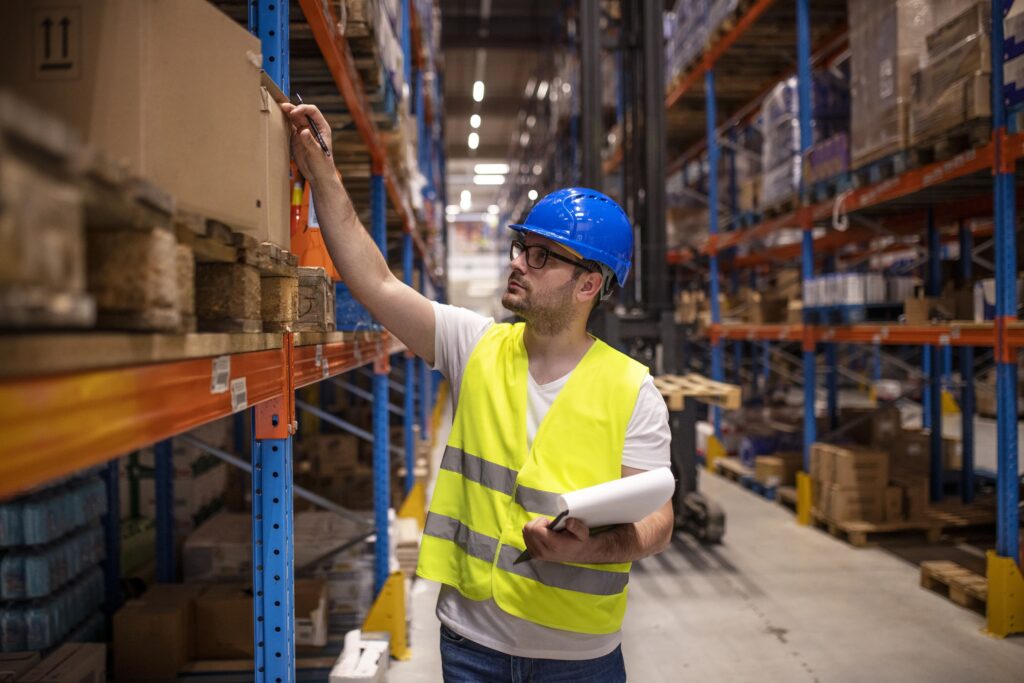
“Picking” describes a typical process in the logistic management of the warehouse.
Picking literally translates to “collecting”, in practice it means taking one or more items from the load unit of the type and quantity specified on a picking list, which can be either a customer order (Order Picking) or a production list generated by the I.T. system for the servicing of production lines (Line Feeding).
The opposite operation of replenishing supplies is defined as “Refilling”.
Picking is one of the most important functions of warehouse management: in fact, this activity absorbs the largest amount of operating costs and significantly affects the level of customer service which can be provided in terms of speed and accuracy, impacting on the overall level of satisfaction and therefore on the company’s image.
It is estimated that 60% of expenditure incurred on warehouse management is associated with picking.
Picking strategies and factors affecting this choice
It is possible to identify different picking strategies.
- Order Picking
“Order Picking” describes the picking system or picking method which consists of collecting all the items related to a single order. This approach is effective for orders with a small number of SKU (Stock Keeping Units) codes and related quantities.
- Batch Picking
“Batch Picking” is a method of order preparation in which multiple units of the same SKU code are picked simultaneously to fulfil orders from different customers.
- Zone Picking
“Zone Picking” means a picking method in which the picking area is divided into different zones, each of which is assigned to one or more operators.
- Wave Picking
“Wave Picking” is a picking methodology based on grouping items according to predetermined criteria (e.g. recipient customer, packaging, courier, etc.). Orders are issued to individual employees at specific times during the day in different areasto align the picking process with specific events such as shipping times, supply cycles, shift changes, available workforce, etc.
Identifying the appropriate picking strategy is essential to avoid financial losses and reduce lead times.
There are a number of factors that affect order fulfilment criteria and have an impact on the choice of the most suitable picking strategy:
- The type and number of Picking Lists
- The number of SKU codes in stock
- The characteristics of the items to be picked (shape, size, weight, perishability, volume and traceability)
- The item management logic (FIFO, LIFO, FEFO)
- The quantities and volume in stock by item code
- The average number of rows fulfilled per SKU and the total number of rows
- The number of pieces row
- The average lead-time required for order fulfilment
- The space available in the warehouse
- Any seasonal peaks
Picking methodologies: manual picking vs automated picking
Picking can be handled manually or automatically.
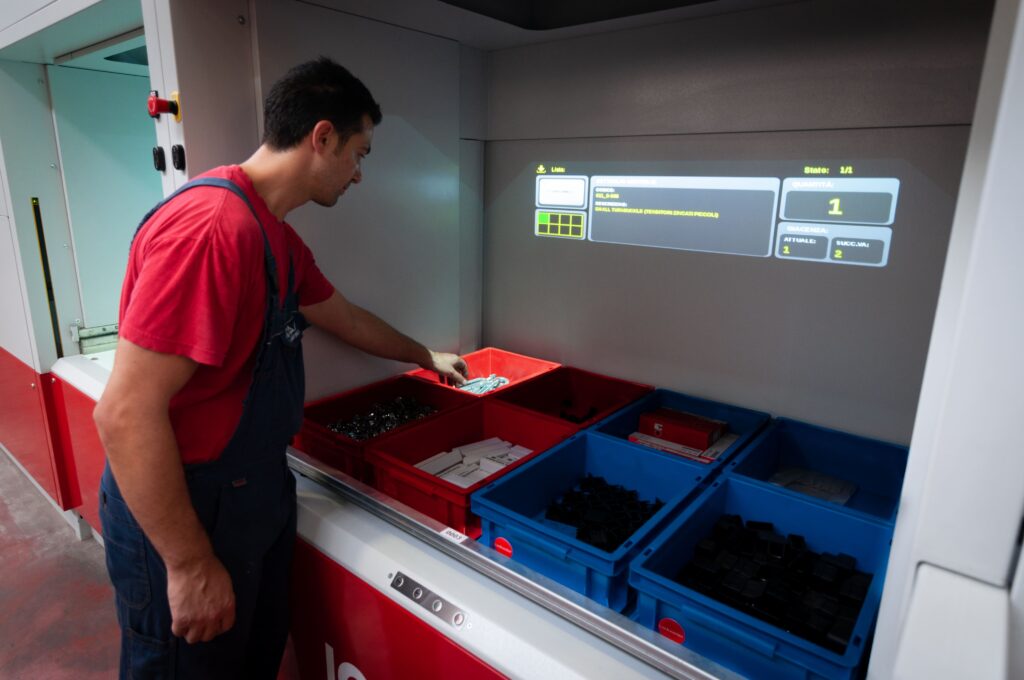
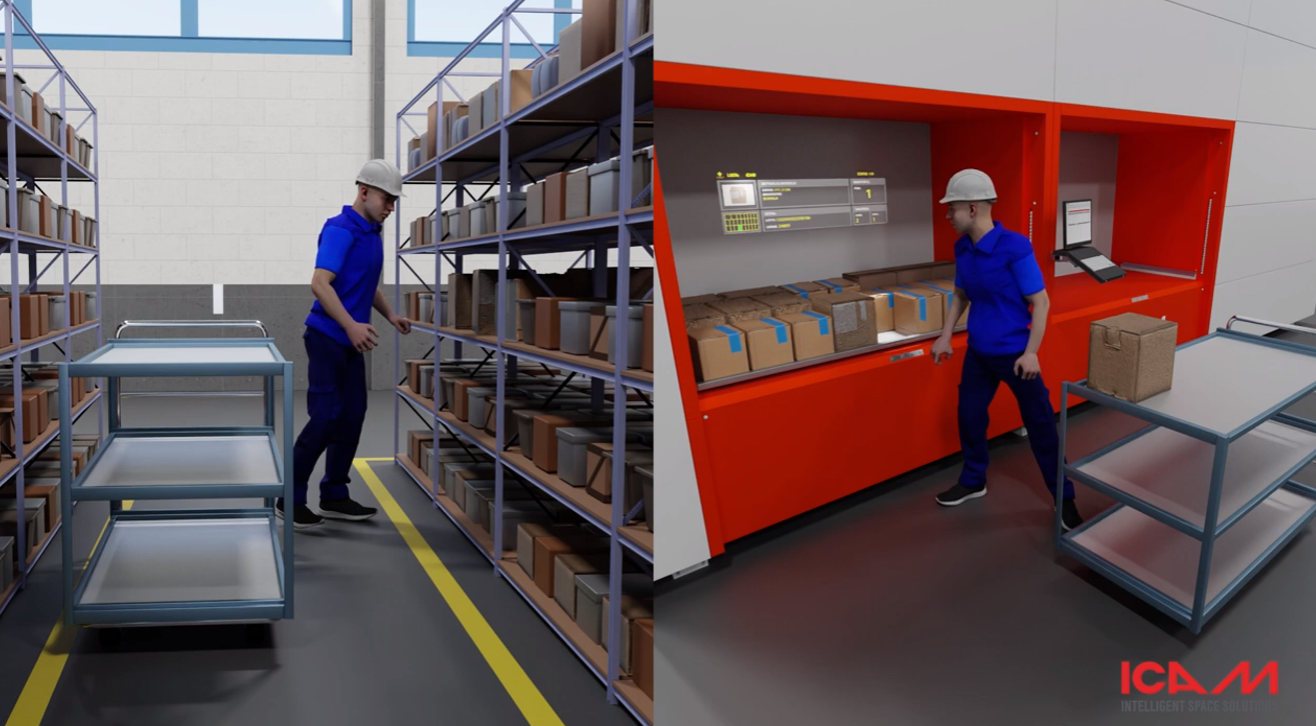
Manual picking operates according to the “person-to-goods” logic: in this scenario, it is the warehouse operators who move in the direction of the goods. This methodology is more exposed to possible errors and inefficiencies.
Automated picking operates according to the opposite “goods-to-person” logic, with the support of industrial automated warehouse systems or robots, the warehouse operator is no longer required to move around the warehouse to collect the goods, but remains waiting for the requested item in a fixed, safe and ergonomic position.
The advantages of automated picking system
In a market that demands speed, adaptability and cost reduction, warehouse logistics are under constant pressure: processing orders quickly, with zero errors and at the lowest cost is essential for profits and your company reputation. Automating and digitizing picking processes, in an Industry 4.0 perspective, is a must for every company, both in the world of production and distribution.
With automated picking system, warehouse operators will no longer have to move around the warehouse in search of the correct shelf and will be relieved of repetitive, tiring, time-consuming and cost-intensive tasks.
Automated dispensing reduces the risk of workplace accidents due to dangerous operations and protects goods from possible damage during handling, while speeding up order processing times.
Computerized management ensures high levels of accuracy and constant monitoring of the inventory status, reducing the risk of stock outages and reducing procurement times and costs.
Watch the video and discover how SILO² reduces picking times by eliminating operator walking
ICAM’s intelligent solutions for fast, ergonomic and efficient picking
SILO automated vertical warehouse systems from ICAM offer a fast, ergonomic and efficient picking system.
With SILO² multi-column automated vertical lift modules, the possibility to configure each module with multiple picking/refilling stations– side by side, opposite or on different levels – drastically reduces picking and refilling times: while the operator carries out operations in one picking/refilling station, the vertical lift system proceeds with the removal and release of the next tray in the second picking/refilling station, which, in the case of side-by-side picking/refilling stations, will be immediately accessible.
The integration of innovative options increases speed and accuracy in picking and refilling operations, which is essential to meet the needs of the current market:
- IRIDE is our innovative multimedia and interactive system which guides the operator step-by-step through the picking or refilling operations: a beam of colo
ured light (Light Picking Guide) illuminates the compartment containing the material to be picked, while all the relevant information is projected onto the digital dashboard (Head-up Digital Dashboard) in the field of vision of the operator who can interact with this data in real-time by modifying the number of items to be picked or refilled, confirm or cancel the operation via the push button panel in the picking/refilling station, without having to return to the onboard PC. - The Smart Vision system thanks to sophisticated Image Processing algorithms and a camera that allows the detection of the tray surface and the reading of a QR code positioned on the upper side of each stored item, ensures the correct picking or refilling and the right allocation of the tray inside the vertical lift module, while reporting any anomalies.
- Interface between SILO vertical lift modules and anthropomorphic robots and cobots frees up operators from repetitive, tiring and low value-added activities while allowing the creation of robotic Pick&Place islands to automate supply to machining centres or machine tools, kit preparation, order preparation and packaging.
Are you looking to make your warehouse picking system more efficient?
Our technical consultants are always ready to help you with personalized advice: Contact us
If you want to learn more about the advantages of automatic warehouses, read our latest article dedicated to automated warehouse system