
We would like to analyze in detail what kitting is. Let’s find out together.
Modern industrial economies require ever greater speed, accuracy and quality of the output products: complex objectives to achieve without the definition of the right materials workflow and its synchronization with the production processes.
Let’s take a practical example: imagine a manufacturing company that has to assemble 5,000 products a day to reach its break-even point and can count on 25 operators to complete the task. If we consider that it takes 5 minutes to assemble each product and each operator works an 8-hour shift, they would never be able to achieve this target, if every operator was obliged to go and search for the different parts they need to assemble the product.
They would need additional time to search for articles and “extra time” equals “extra costs”.
It is therefore necessary to separate the supply and workflow of materials from that of operations by synchronizing and aligning the two processes.
How is that possible? One solution is by using kitting.
Kitting: what is it?
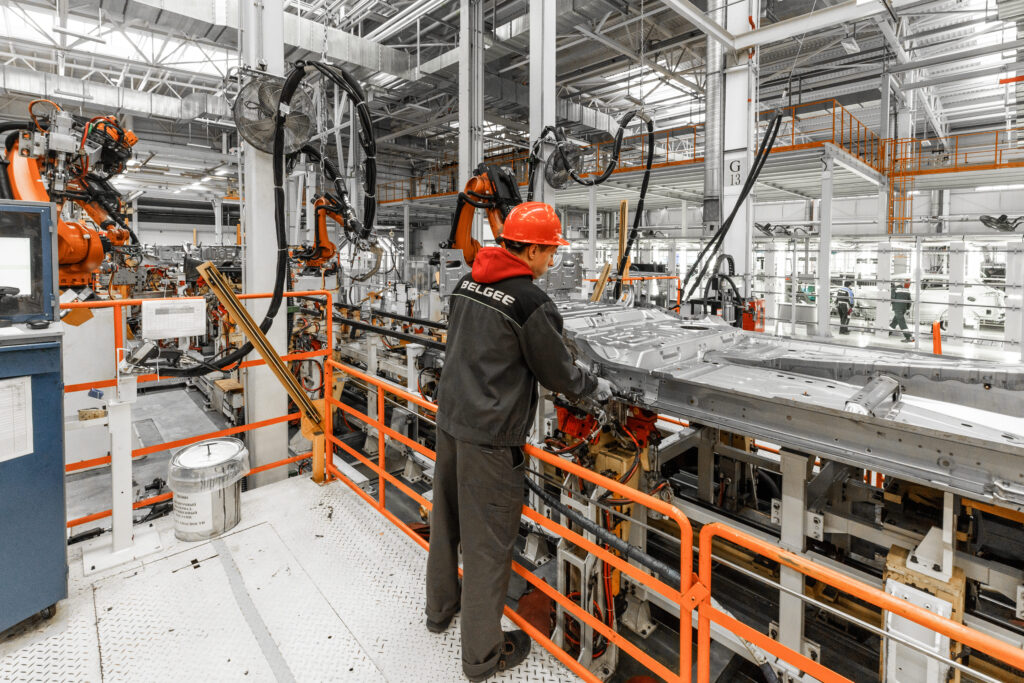
The term “kitting” refers to the grouping of all the different components and parts needed to complete a task (e.g. maintenance, production, etc) and supplying them as a single unit called a “kit” or “set”.
Kitting activities are usually carried out before the kits are needed by production or assembly lines with the aim of not slowing them down in any way. This avoids the necessity to search for components or parts that are needed during the production phase and speeds up the process, improving overall efficiency.
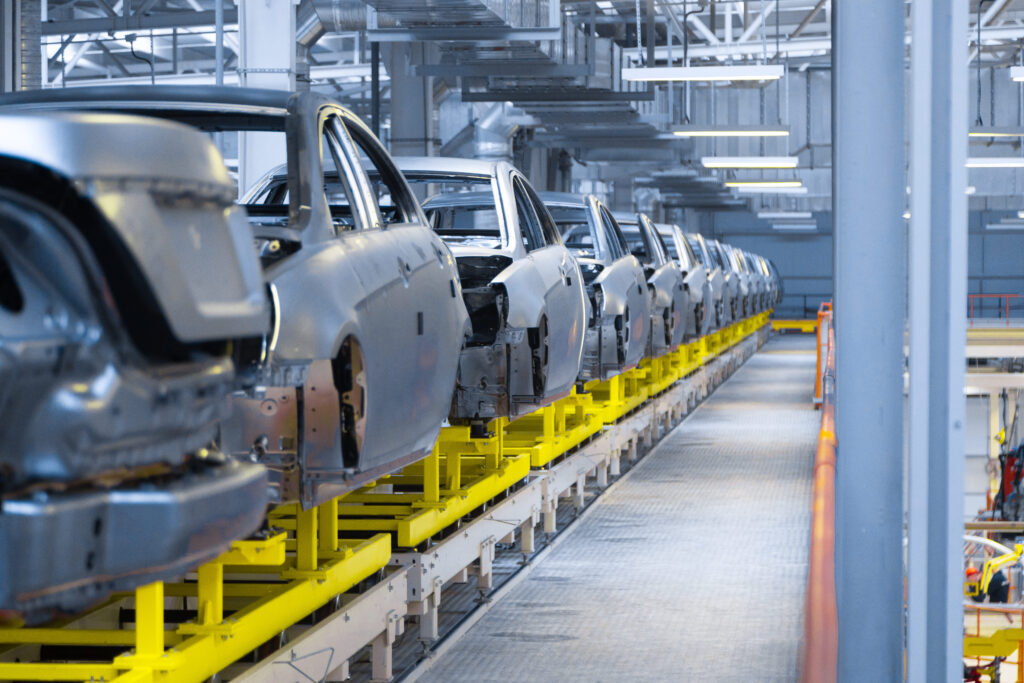
The primary objective of kitting is in fact that of guaranteeing the uninterrupted supply of materials to operations.
Kitting is used in various sectors such as the automotive, aeronautical, electronic and pharmaceutical sectors and many others that include numerous picking/refilling station along the production or assembly lines.
How does kitting impact company performance?
Making sure that the right material, or kit, arrives at the right time, in the correct quantities and under the proper conditions at the right picking/refilling station, whether that is maintenance, production or assembly, has a significant impact on the performance and profitability of the business in terms of:
- service offered to customers: the quality of processing, compliance with delivery times, etc.
- operating costs: storage, handling, staff, etc.
- invested capital: infrastructure, warehouses, stock, handling systems, etc.
The need to align and synchronize the workflow of materials with the needs of the different picking/refilling station determines the necessity to release the flow of activities and materials by creating inter-operational storage buffers near the various locations.
Automatic Kitting vs Manual Kitting
The traditional approach based on manual management involves inefficiency as well as waste, together with increased risks.
The operators are obliged to:
– Often travel long distances in search of articles
– Pick the right article and the right quantity
– Assemble them into kits as necessary
– Deliver them to the various work stations
This has a very negative impact in terms of time, costs and staff motivation.
In the era of Industry 4.0, the automation of kitting processes is a fundamental step for the optimization of resources, as well as an extraordinary opportunity to regain competitiveness in an increasingly volatile and global market.
Reducing machine downtime to a minimum and processing orders in a shorter time, with zero errors and at a lower cost, is strategic in today’s market and automation is absolutely essential to achieve this. The objective: to be faster and more accurate in the preparation of kits to supply the various work stations in the shortest time possible.

The advantages of automated kitting
- Fast and efficient supply of the production or assembly lines: thanks to the automation of the kitting process, warehouse operators are no longer obliged to move around the shelving in search of the different articles they need to collect and no longer have to perform repetitive, low-value, time-consuming and expensive tasks.
- 24-hour operation: 4.0 technology enables kitting tasks to be performed in unattended mode, 24 hours a day
- Zero errors: using automated kitting solutions eliminates the probability of kit composition errors that manual handling normally inevitably involves. The result is prepared kits of the highest quality, supplying high quality assembled outputs.
- Greater flexibility and adaptability of the process: automated systems can be programmed to prepare kits in advance of specific business needs and can be easily reprogrammed in case of any changes to production.
- Monitoring and process analysis: managers will be able to analyze the data collected to identify any inefficiency and make changes to the process to further improve productivity and operational efficiency.
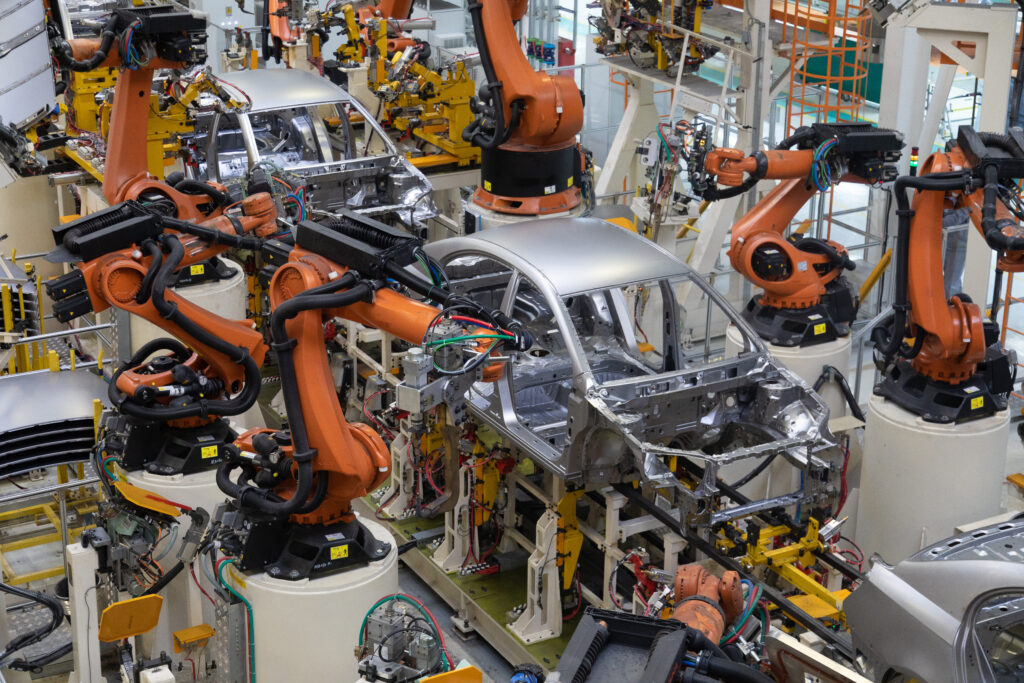
Robotic Pick&Place islands
Robotic pick&place islands, made by integrating collaborative robots (cobots) with ICAM’s SILO vertical lift modules, are the perfect solution for automating the kitting process.
The possibility to configure the SILO automated vertical lift modules with multiple picking/refilling stations, side-by-side, allows cobots to work alongside operators, with zero safety risks and with a single common goal: maximum efficiency.
This was the path taken by Benelli Armi, who, with the implementation of a fully automated system for picking components and assembling production kits with the integration of collaboration robots in the multi-column SILO vertical lift modules, has managed to not only speed up kit assembly time, but also significantly reduce the rate of errors.
Find out more about our automatic warehouses for fast kitting