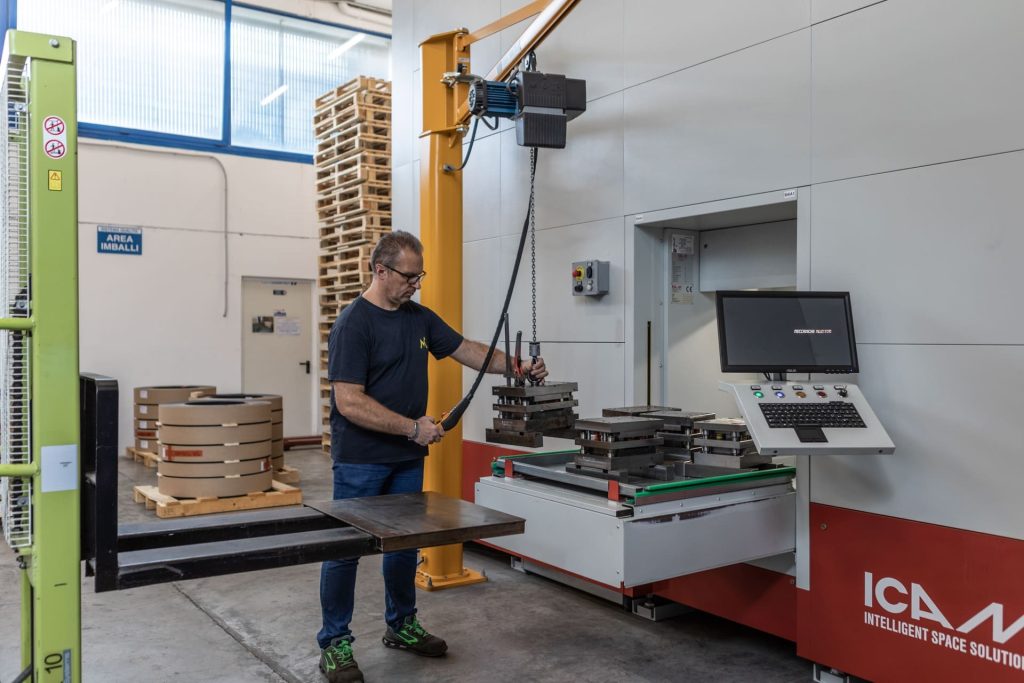
Optimizing warehouse efficiency can truly make a difference in business development according to efficiency and productivity logic.
In a market scenario that constantly puts pressure on warehouses and the entire transportation and logistics sector, it is essential to set few but clear goals to be achieved with smart solutions capable of increasing the efficiency and resilience of companies.

Warehouse layout: optimize available space for better efficiency
The surface area of an industrial warehouse is a precious resource.
Optimizing the available space is a strategic factor for productivity and profitability. Waste of space and the resulting saturation of usable area reduce production capacity and can lead to higher costs for renting or purchasing a new facility.
One of the best ways to optimize space is to effectively organize the warehouse layout based on the logistics processes performed inside (receiving goods, storage, picking, packing, shipping, etc.). Designing the layout efficiently enhances productivity and reduces logistics costs, particularly regarding material handling and operator travel distances.
1 – Make better use of available space
2 – Increase operator productivity
3 – Eliminate picking and refilling errors
4 – Automate repetitive and low-value-added activities
5 – Always ensure maximum safety for operators and goods
1. Make better use of available space
The surface area of an industrial warehouse is a highly valuable resource.
Optimizing the available space is a strategic factor for both productivity and business profitability. Wasting space and the resulting saturation of usable surface area reduces production capacity and may lead to higher costs for renting or purchasing a new warehouse.
One of the best ways to optimize available space is to effectively and functionally organize the warehouse layout according to the logistics processes carried out within it (goods reception, storage, picking, packing, shipping, etc.). Designing the layout efficiently, in fact, helps to increase productivity and reduce logistics costs, particularly in terms of goods handling and operator travel distances.
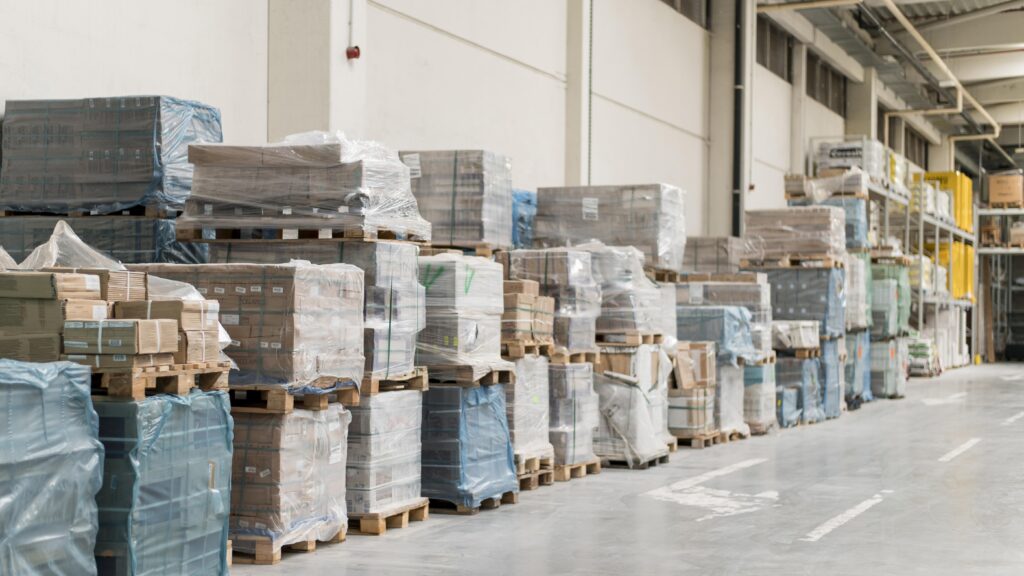
2. Boost operator productivity to enhance Warehouse Efficiency
The time of warehouse operators is valuable and limited; therefore, it is crucial to minimize all low-value activities.
In an industrial warehouse, achieving this goal requires choosing the right storage strategy (automatic vs. manual) and material handling (person-to-goods vs. goods-to-person). Ensuring that all managed references are well organized and tracked at all times is essential to prevent operators from spending too much time searching for goods and wasting precious time.
A disorganized or overcrowded warehouse significantly increases the likelihood of making errors and extends the time needed to locate and pick items, consequently impacting order fulfillment and customer service levels.
3. Eliminate picking and refilling errors for improved efficiency
Warehouse efficiency is not only measured by the speed of picking and refilling operations but also by the accuracy and precision with which they are performed.
Eliminating picking errors is crucial for improving business profitability, as picking is one of the activities that significantly impacts warehouse costs, leading to returns, inventory discrepancies, credit notes, and customer dissatisfaction.
Being competitive, therefore, is not just about speed but also precision.
Real-time inventory tracking and visibility are essential in any industrial warehouse. Knowing at all times what is in stock, how long it has been there, and where it is located drastically reduces the chances of shipping errors, stock interruptions, and inventory mistakes.
4. Automate low-value repetitive tasks to increase Warehouse Efficiency
Automating warehouse processes frees up human resources that can be utilized for higher-value activities, such as production planning, quality control, performance analysis, and improvement.
Among the repetitive and low-value tasks that warehouse operators often have to perform is inventory counting and logging on paper records the number and type of each item in stock.
Another repetitive task, sometimes laborious and definitely demotivating for any skilled operator, is kitting, which involves grouping together parts needed to perform a specific task (e.g., assembly, production, maintenance, etc.).
5. Ensure maximum safety for operators and goods in every industrial warehouse
Safety in the industrial sector, particularly in warehouses, is a crucial topic for ensuring the health and safety of operators and the safeguarding of goods.
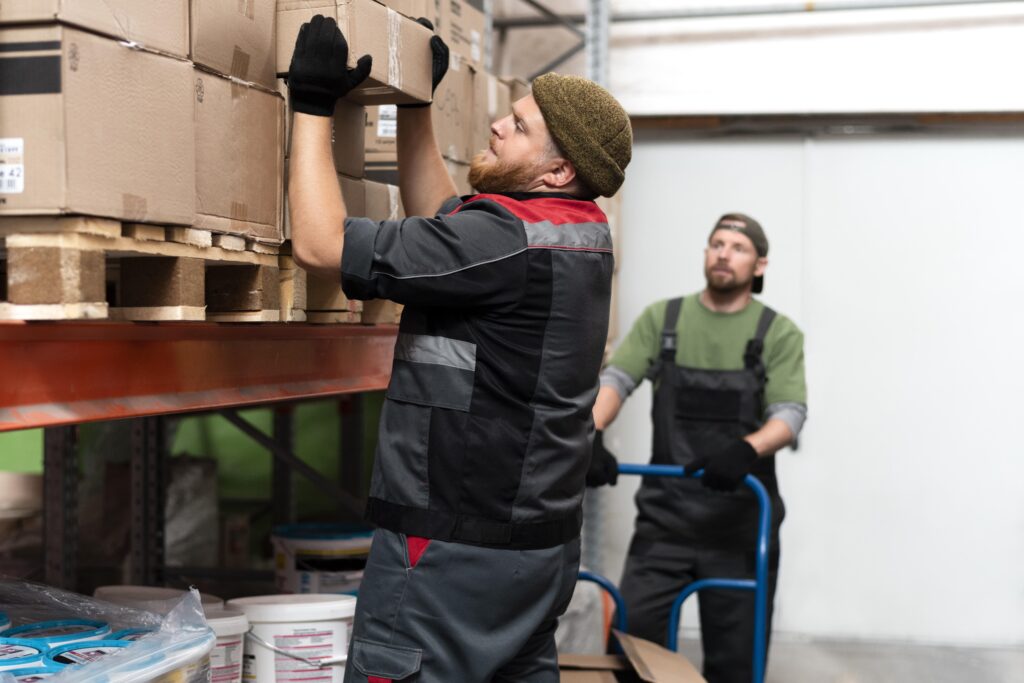
Preventing risks and accidents for warehouse workers and protecting the items and equipment managed is vital to avoid interruptions in activities that could affect customer service levels, along with potential financial damages to the company.
Vertical SILO² VLMs: a valid solution for implementing your 5 good resolutions
Maximize available space
One of the most effective strategies to optimize the space in an industrial warehouse is to use storage systems that utilize vertical space to offer maximum storage capacity with minimal footprint, such as the automatic vertical SILO² VLMs.
Thanks to their modular structure, the automatic vertical SILO² VLMs can be easily adapted to existing structures, optimizing all available space.
Compared to traditional storage solutions, the vertical automatic SILO² VLMs can save up to 90% of floor space. The unused area can thus be allocated to other activities or reserved for future growth needs.
Boost operator productivity
With the “goods-to-person” principle, all items stored within the vertical automatic SILO² VLMs are immediately available at the picking and refilling station.
Compared to traditional storage systems, operators no longer need to waste time searching for items among various warehouse shelves, leading to significant savings in effort and time.
This benefit has been clearly demonstrated by Uniservice, which, thanks to the SILO² VLMs, has significantly increased the pick rate per operator: before their installation, operators could perform 160-180 picks a day; today, with SILO², they can exceed 200 in just half a day.
Eliminate picking and deposit errors
Thanks to the interfacing of ICON, the management software for the vertical automatic SILO² VLMs, with the most common WMS and ERP systems, companies can significantly increase the accuracy of picking and refilling activities.
Additionally, with the installation of IRIDE, ICAM’s innovative interactive technology that guides operators step-by-step throughout the picking process, it is possible to eliminate any chance of error.
Automate repetitive low-value tasks
This way, operators in any industrial warehouse are relieved from low-value repetitive activities. This goal has been achieved by Benelli Armi, which has focused on collaborative robotics to automate the picking of components and the assembly of production kits to supply the lines of its manufacturing facility.
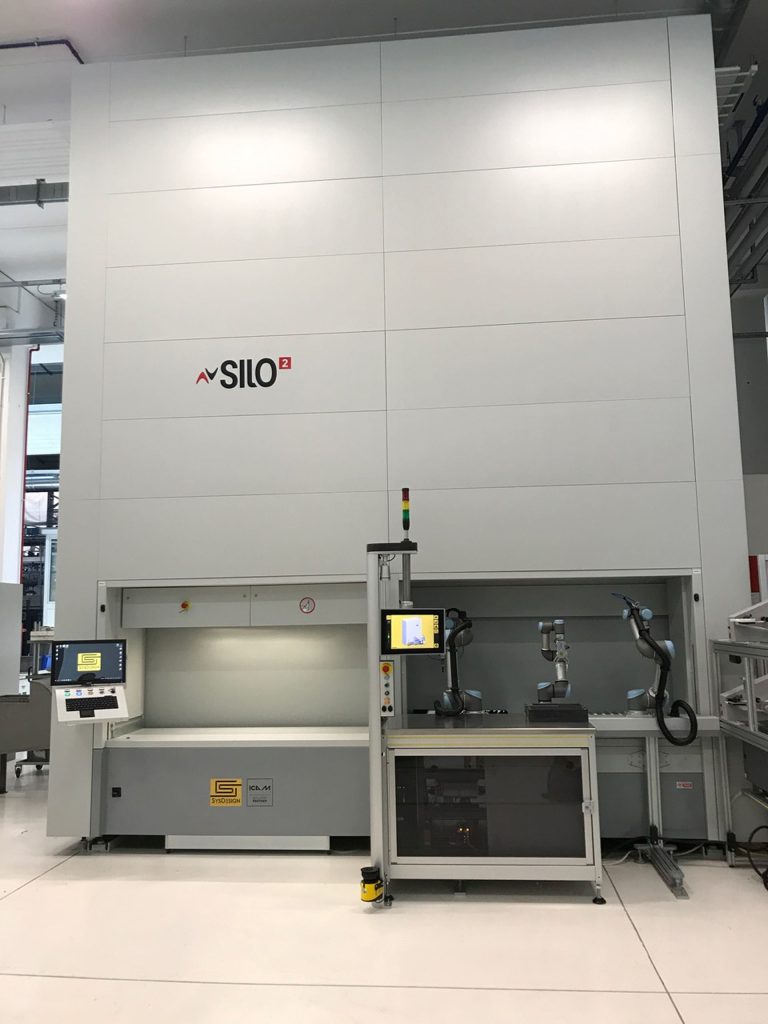
Read the Benelli Armi case study
Ensure maximum safety for operators and goods